
Richland County Genealogy Records
Richland County genealogy research is supported by one of the richest concentrations of genealogy resources in South Carolina. Richland County contains Columbia, the state capital, which means the South Carolina Department of Archives and History and the South Carolina Department of Public Health are both located within the county. The University of South Carolina's South Caroliniana Library is the premier repository for South Carolina manuscripts and family history materials. Richland County was formed in 1785 as one of South Carolina's original counties, and its records span more than two centuries. The county seat is Columbia. The Richland County Probate Court, Register of Deeds, and the Richland Library are the primary local sources for genealogy records, with the Richland Library maintaining an extensive local history room for Columbia and Richland County research.
Richland County Quick Facts
Richland County Probate Court and Marriage Records
The Richland County Probate Court holds marriage licenses issued from July 1, 1911 through June 30, 1950. Under S.C. Code Ann. § 20-1-20, every marriage in South Carolina requires a written application filed with the Probate Court before a license is issued. The court maintains a permanent record of all licenses as required by § 20-1-270. The Probate Court is at Richland County Courthouse, 1701 Main Street, Columbia, SC 29201. Phone: (803) 576-1780.
Estate records at the Richland County Probate Court include wills, inventories, administration papers, and guardianship files from 1785 forward. These documents name heirs, list property, and define family relationships across more than two centuries. Richland County's probate records reflect the full range of Columbia's population: government officials, business owners, university faculty, military personnel, and the African American community that has long been a major part of the city's makeup. These files are primary sources for Richland County genealogy research from the county's founding through the modern era.
For Richland County marriage records from July 1950 onward, contact the South Carolina Department of Public Health at 2600 Bull Street, Columbia, SC 29201. Phone: 803-898-3630.
USC South Caroliniana Library for Richland County Genealogy
The South Caroliniana Library at the University of South Carolina is the premier repository for South Carolina history and manuscripts. It is located on the USC campus in Columbia, SC 29208. Phone: (803) 777-3131. The library holds an extensive collection of family papers, business records, manuscript collections, and university archives. For Richland County genealogy, the South Caroliniana Library is an essential resource alongside the official county offices.
The South Caroliniana Library holds materials that cover the full sweep of South Carolina history, including collections specific to Columbia and Richland County. Researchers tracing families connected to the University of South Carolina, state government, or the Columbia business community will find the South Caroliniana Library's manuscript collections invaluable. The library welcomes researchers and staff can assist with locating relevant collections.
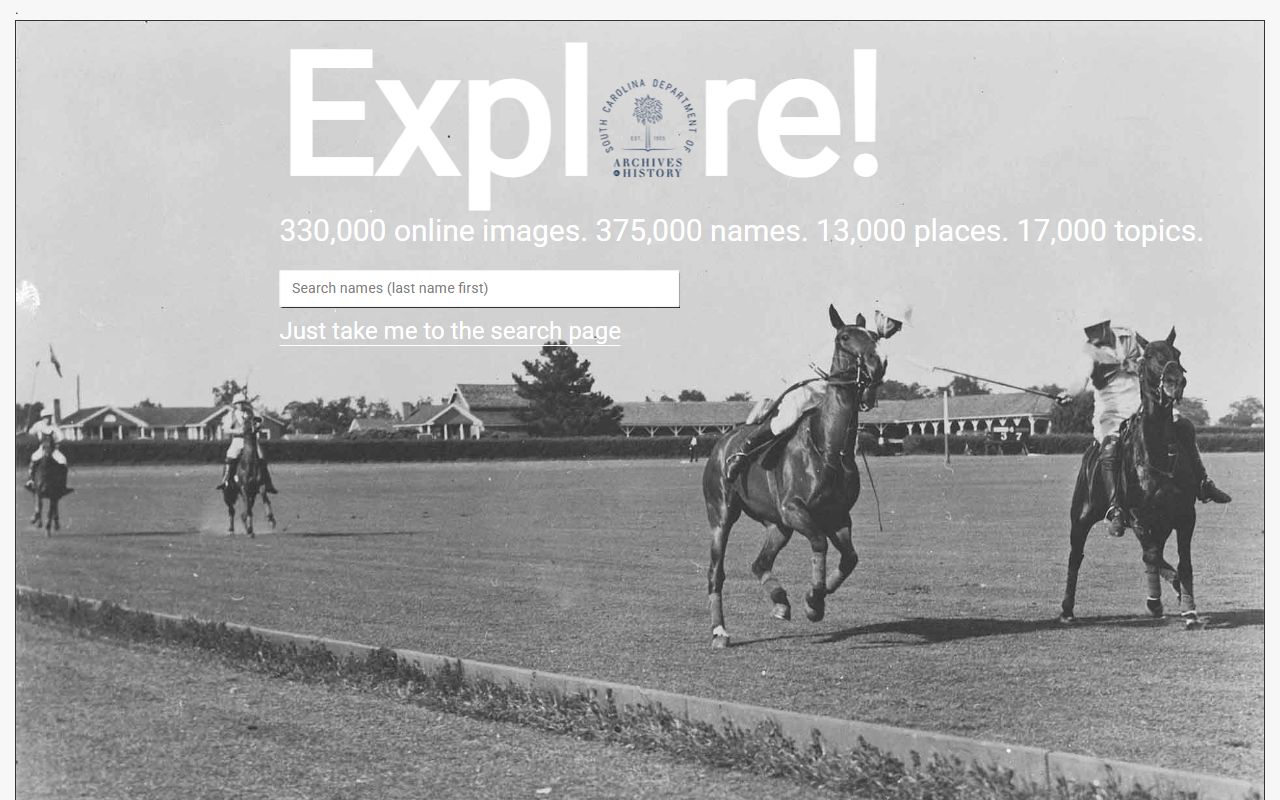
The Online Records Index is the best free starting point for Richland County genealogy and covers collections held at SCDAH that include materials from over two centuries of county history.
Richland County Vital Records for Genealogy
South Carolina required birth and death registration starting January 1, 1915. Under S.C. Code Ann. § 44-63-10, every birth must be registered within five days. The South Carolina Department of Archives and History holds Richland County birth records for 1915 to 1918 online and death records for 1915 to 1963. The South Carolina Department of Public Health holds vital records from 1915 to present at 2600 Bull Street, Columbia. Phone: 803-898-3630.
Death certificates become public records 50 years after death under § 44-63-84. The free South Carolina death index for genealogy covers Richland County deaths from 1915 through 1967. For Richland County genealogy before 1915, church records, census data, and probate files are the primary sources. Columbia had active Episcopal, Presbyterian, Methodist, Baptist, and Catholic congregations whose registers document vital events from the early nineteenth century.
Richland County Register of Deeds and Land Records
The Richland County Register of Deeds maintains land records dating back to 1785. The office is at 1701 Main Street, Columbia, SC 29201. Phone: (803) 576-1910. Deeds, mortgages, and plats document property ownership across more than two centuries. Under Title 30 of the South Carolina Code of Laws, counties are required to maintain and preserve these public land records.
The SCDAH Online Records Index includes state land grant plats from 1784 to 1868 that cover Richland County. These early plats document original land grants in the Congaree River valley and identify the earliest families to receive land in what became Richland County. Columbia was established as the state capital in 1786, and early land records reflect the rapid development of the city from its founding.
Richland Library Local History Room
The Richland Library at 1431 Assembly Street, Columbia, SC 29201 maintains extensive local history collections for Columbia and Richland County. Phone: (803) 799-9084. The library's local history room holds city directories, newspapers, photographs, and materials on Columbia's development as the state capital. Census records, local newspapers, and family history materials available through the library complement official county genealogy records.
The South Carolina State Museum at 301 Gervais Street, Columbia, SC 29201 maintains historical collections related to South Carolina history including genealogical resources and materials on Columbia's history. Phone: (803) 898-4921. Historic Columbia at 1616 Blanding Street, Columbia preserves historic house museums and research materials related to Columbia's historic properties and the families who lived in them. Phone: (803) 252-1770.
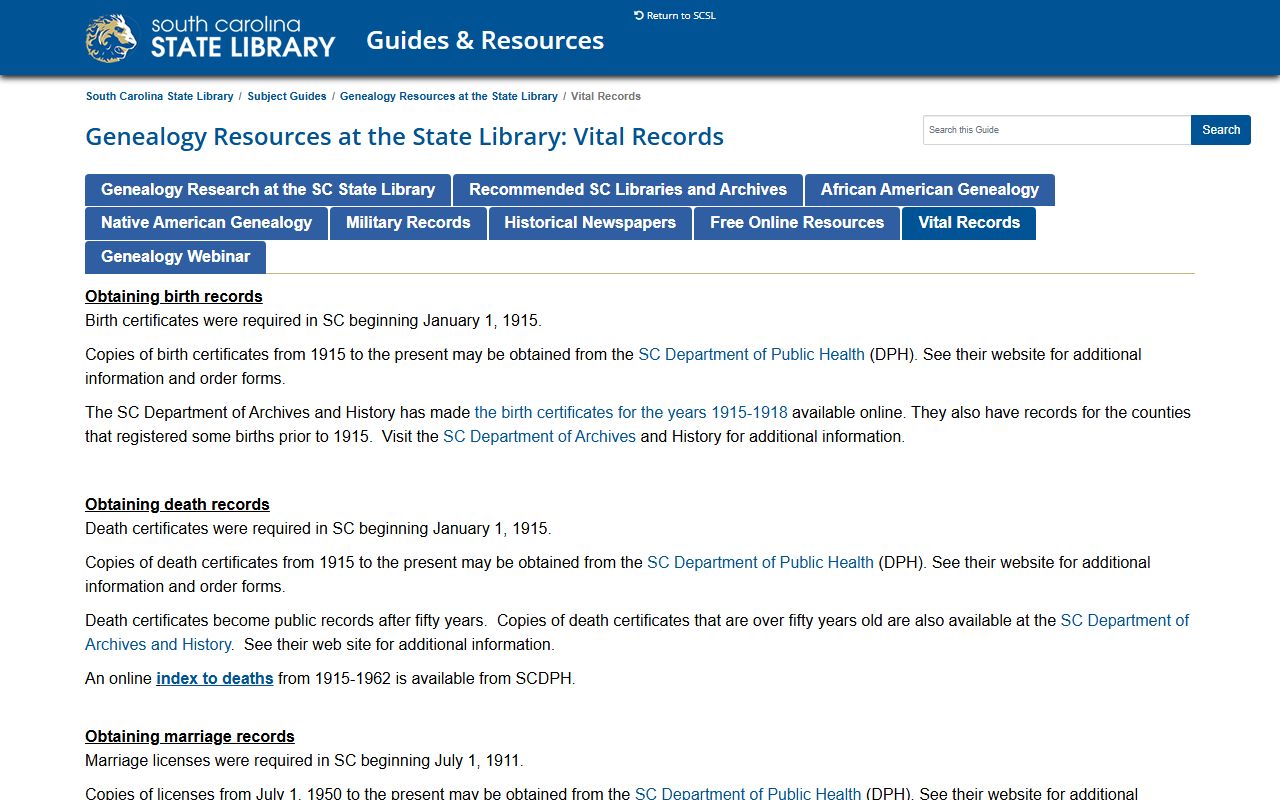
The State Library, located in Columbia, is itself a research resource for Richland County genealogy and publishes guides explaining how to navigate SC records across all time periods.
South Carolina Archives Resources for Richland County Genealogy
The South Carolina Department of Archives and History holds extensive Richland County records including court files, land documents, and census materials. SCDAH is at 8301 Parklane Road, Columbia, SC 29223. Phone: (803) 896-6100. The Research Room provides access to microfilm and a research library covering all 46 counties. Staff answer queries by mail, email, and phone.
The SCDAH Digital Collections include Confederate Pension Applications from 1919 to 1938 and Will Transcripts from 1782 to 1855. Will Transcripts from Richland County are available free online and cover estates from the county's early years. The Library of Congress South Carolina genealogy guide provides resources covering Richland County. The South Carolina Genealogical Society connects researchers to county-level genealogy resources through local chapters.
Cities in Richland County
Columbia is the county seat of Richland County and the state capital of South Carolina. Genealogy records for all Richland County communities are maintained at the county Probate Court and Register of Deeds in Columbia.
Nearby Counties
Richland County borders several South Carolina Midlands counties. Ancestors near a county line may have records in neighboring counties.