
South Carolina Genealogy Records
South Carolina genealogy research spans centuries of record-keeping across all 46 counties. Vital records registration began in 1915 for both births and deaths. Marriage licenses became required on July 1, 1911. Before those dates, genealogy researchers rely on county probate records, land grants, church registers, and census data. The South Carolina Department of Archives and History serves as the primary repository for state genealogy records. You can search South Carolina genealogy records online, by mail, or in person at archives and county offices throughout the state.
South Carolina Genealogy Quick Facts
South Carolina Department of Archives and History
The South Carolina Department of Archives and History (SCDAH) is the state's central repository for genealogy research. The Research Room at 8301 Parklane Road, Columbia, SC 29223 contains a small research library, indexes to state and local records, and microfilm of federal, state, and local documents. Computers, microfilm readers, copy machines, and wireless internet access are all provided on site. The Reference Services Unit answers mail, telephone, and email queries about records in their care. You can reach SCDAH at (803) 896-6100.
SCDAH maintains several major collections for South Carolina genealogy. These include will transcripts from 1782 to 1855, records of Confederate veterans from 1909 to 1973, plats for state land grants from 1784 to 1868, and criminal court records from 1769 to 1891. Militia Enrollments of 1869 and Grand Jury Presentments from 1783 to 1877 are also held here. The online index allows name-based searching across many of these materials. Birth certificates for 1915 to 1918 are available online through SCDAH as well.
The SCArchCat online catalog allows searching and browsing of all SCDAH holdings. This includes non-current state, county, and municipal records along with copies of records relating to South Carolina government and history from other sources. SCDAH also holds microfilm of county court records, family histories, cemetery records, and tax lists that support in-depth South Carolina genealogy research.
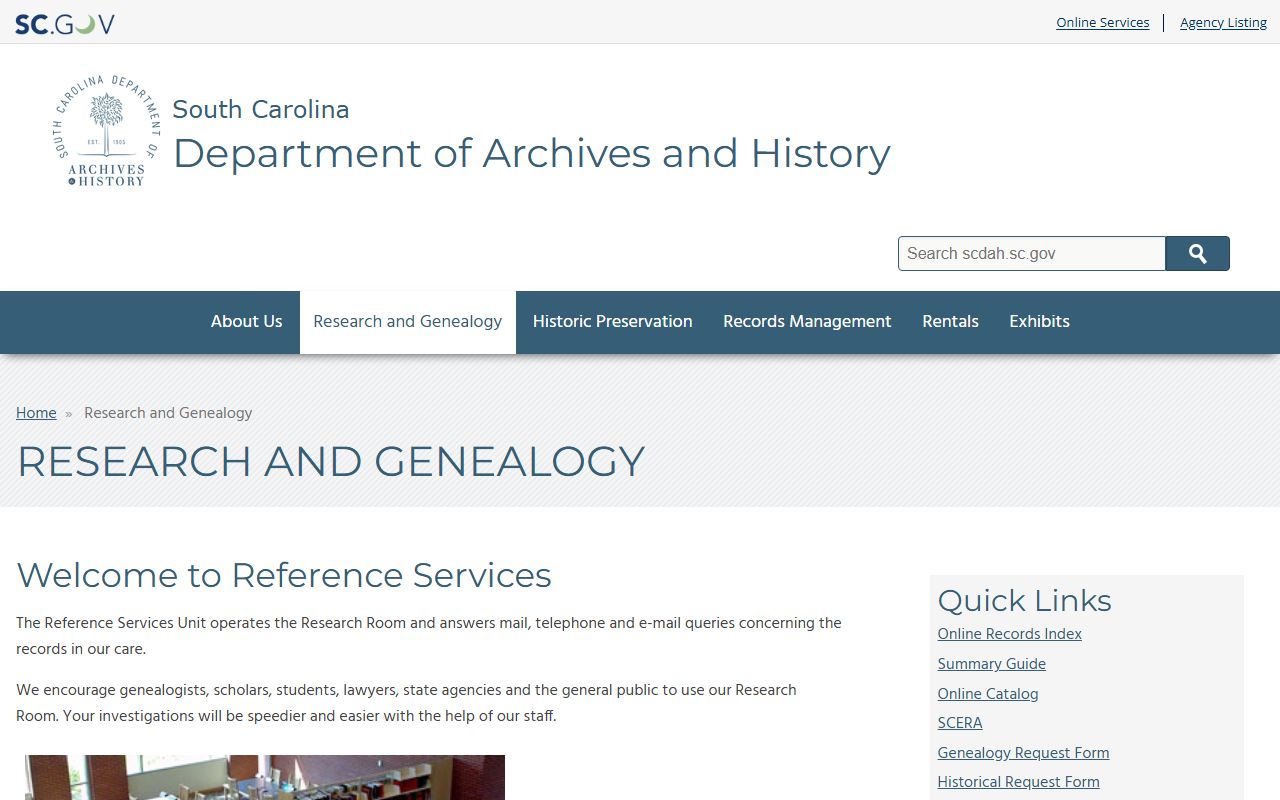
The Research Room at SCDAH is open to the public and provides access to one of the largest genealogy record collections in South Carolina.
South Carolina Online Records Index and Research Portal
The Online Records Index at archivesindex.sc.gov provides free access to a database of SCDAH holdings. You can search by name, topic, and date range across multiple record collections. The index includes will transcripts, Confederate veteran records, state land grant plats, legislative papers, and criminal court records. This is a good first stop for any South Carolina genealogy search, and it costs nothing to use.
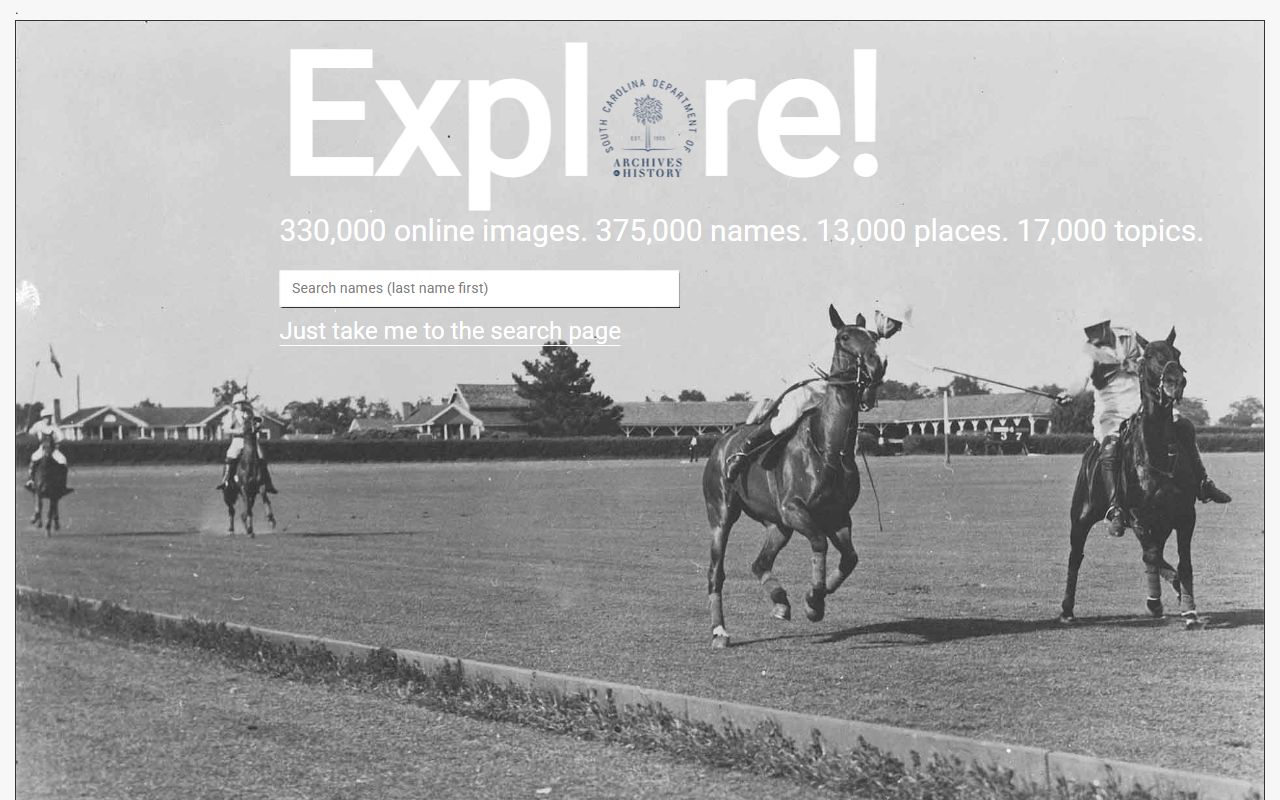
For records not indexed online, the SCDAH Research Room provides in-person access to microfilm collections covering all 46 South Carolina counties.
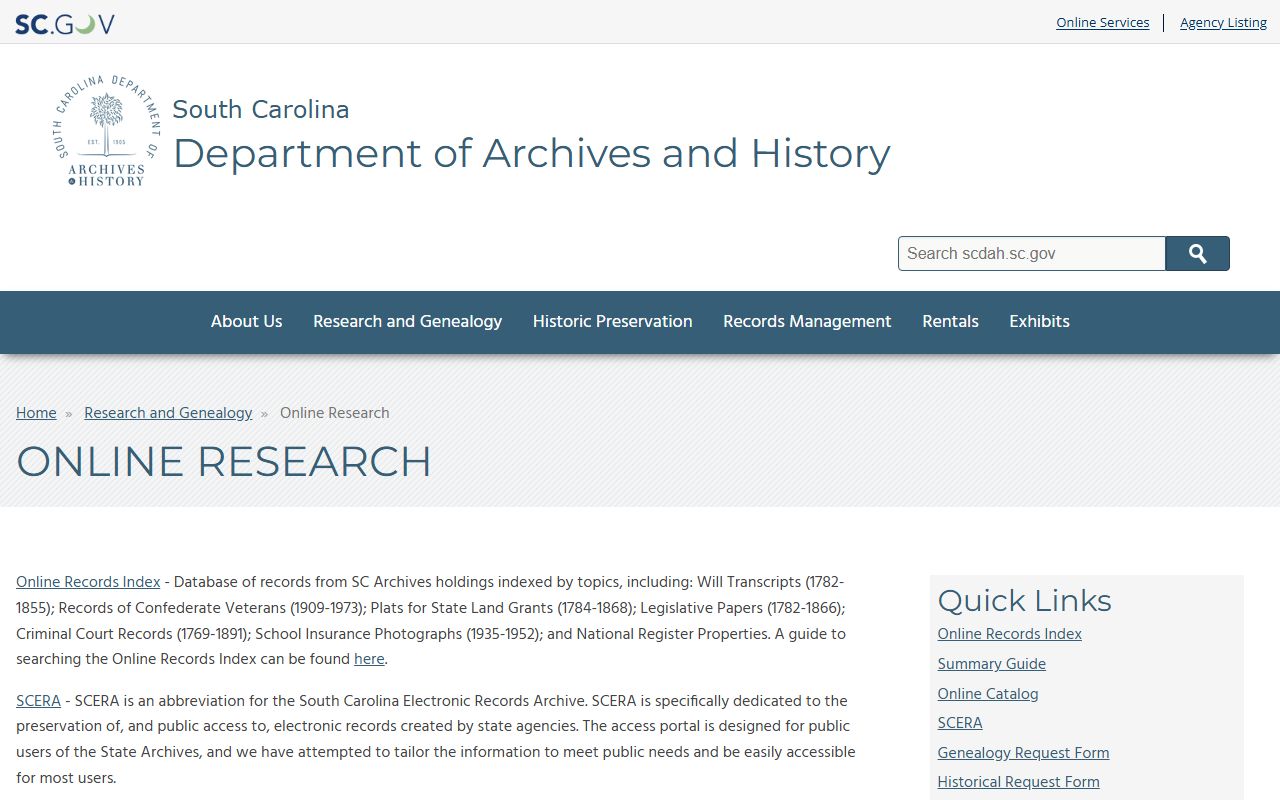
The research portal links to digital collections, the SCArchCat catalog, and finding aids for manuscripts and county records that can direct genealogy researchers to the right holdings.
South Carolina Vital Records for Genealogy Research
The South Carolina Department of Public Health maintains vital records that form the backbone of modern genealogy research. Birth certificates were required beginning January 1, 1915, under S.C. Code Ann. § 44-63-10. Death certificates were also required starting January 1, 1915, under § 44-63-80. Copies of death certificates older than 50 years are available at SCDAH once they become public records under § 44-63-84. The DPH office is at 2600 Bull Street, Columbia, SC 29201. Their phone is 803-898-3630.
Marriage licenses became required starting July 1, 1911. Under S.C. Code Ann. § 20-1-20, no marriage license shall be issued unless a written application has been filed with the Probate Court. Copies of licenses from July 1, 1950 to present are available from DPH. For marriage licenses from 1911 to 1950, genealogy researchers must contact the Probate Judge's Office in the county where the marriage took place. The county keeps those earlier records. Under § 20-1-270, the Judge of Probate must maintain a record of all marriage licenses issued in that county.
Divorce was legal in South Carolina from 1868 to 1878 and again from 1950 forward. Copies of divorce records from July 1, 1962 to present can be obtained from DPH. Records from 1950 to 1962 require contacting the Clerk of Court in the county where the divorce was granted. Access to vital records is governed by S.C. Code Ann. § 44-63-140, which limits certified copies to the person named, immediate family members, legal representatives, or those showing a direct and tangible interest.
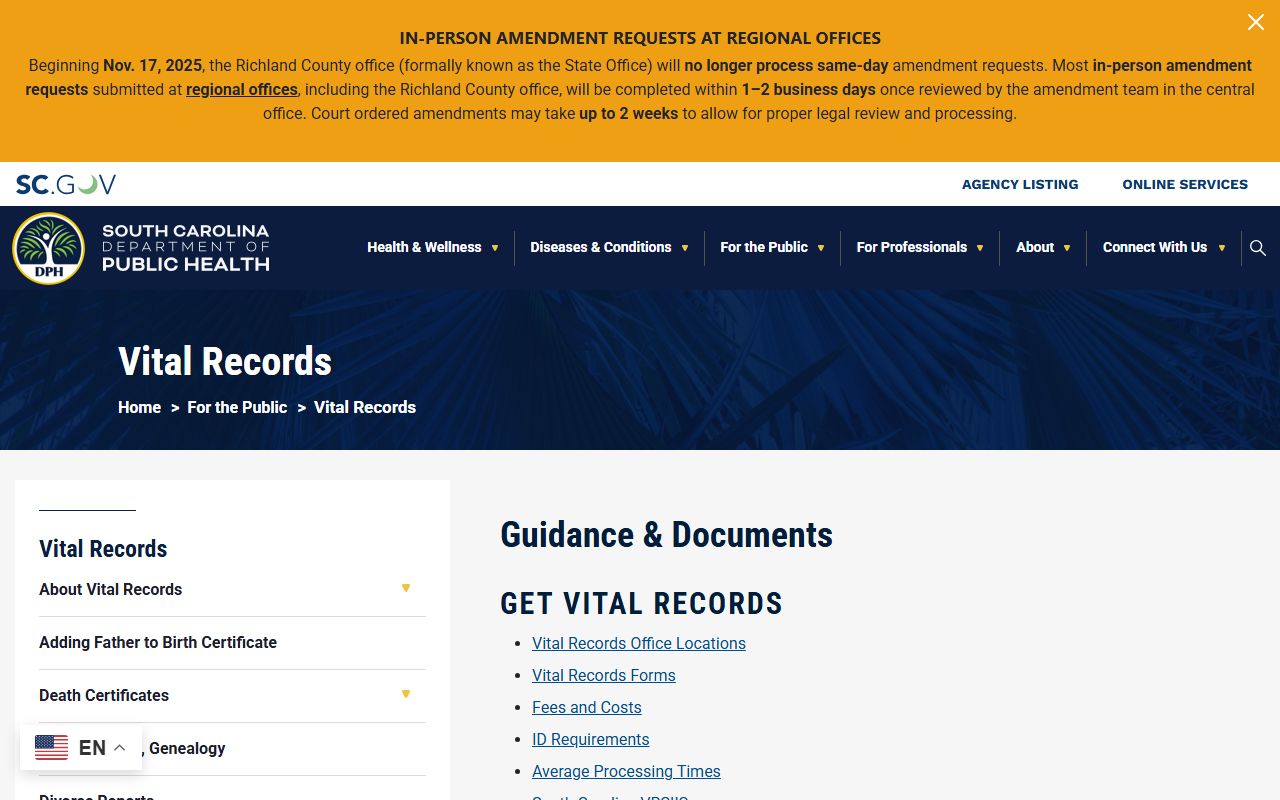
Researchers can order certified copies of vital records online, by mail, or in person at the DPH office in Columbia. Processing times vary by method and by how far back the record dates.
South Carolina Death Index for Genealogy
The South Carolina death index for genealogy includes log files covering deaths from 1915 through 1967. These indexes are free to access online. They allow name-based searching for deaths recorded in South Carolina over more than five decades. SCDAH holds the actual death certificates for 1915 to 1963 in their Reference Room in Columbia.
Death certificates become public records after 50 years from the date of death. That rule makes a large number of South Carolina genealogy records accessible for historical research without privacy restrictions. The death index is most useful when you know an ancestor died in South Carolina but are unsure of the county or exact date. Once you find the name in the index, you can request the full certificate from SCDAH. Entries typically show the name, the date, and the county of registration.
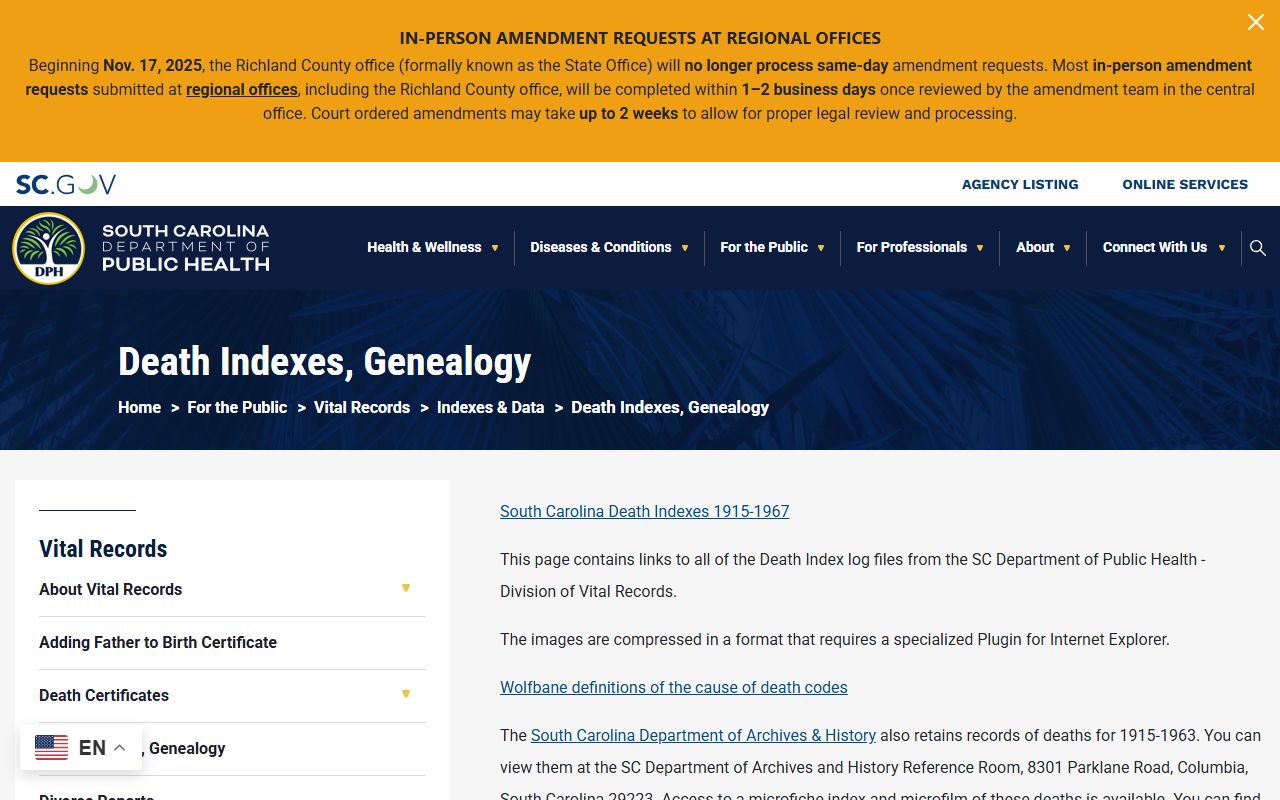
Note: Death index entries point researchers to the full certificate, which contains more detail including cause of death, informant name, and place of burial.
South Carolina State Library Genealogy Resources
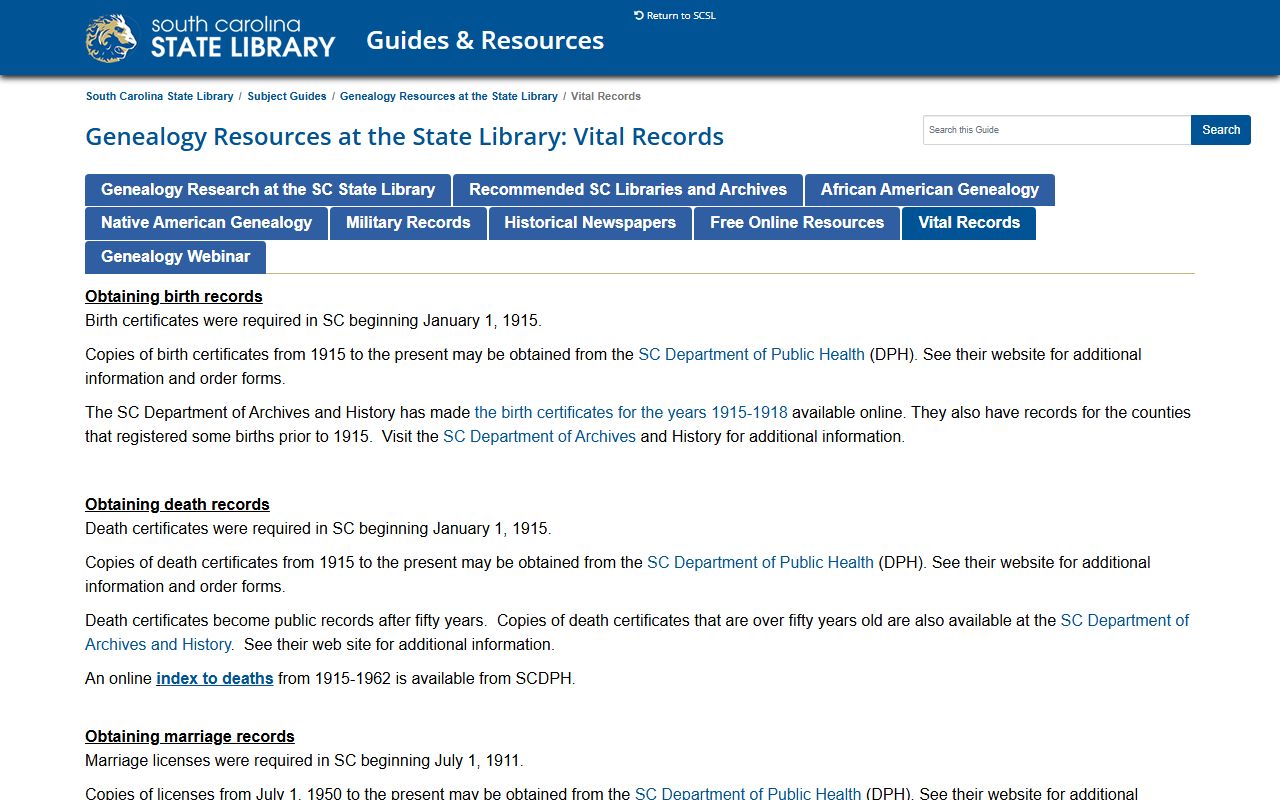
The South Carolina State Library maintains a genealogy guide focused on vital records research. The guide explains the timeline of record availability in South Carolina and directs researchers to the correct office based on the record type and date. The library is located at 1500 Senate Street, Columbia, SC 29201. You can reach them at (803) 734-8666.
The State Library's genealogy collection includes historical newspapers, family histories, county histories, and various indexes. Their guide helps researchers navigate the gap between pre-1915 records held at county level and the post-1915 statewide vital records system. If you are not sure which office holds a specific South Carolina genealogy record, the State Library guide is a reliable first resource.
Note: For South Carolina genealogy records before 1915, county Probate Courts, church registers, and SCDAH microfilm collections are the primary sources.
South Carolina Historical Society Collections
The South Carolina Historical Society is located at 100 Meeting Street, Charleston, SC 29401. Their phone is (843) 723-3225. The society holds extensive genealogy collections. Holdings include diaries, papers, plantation records, business records, church records, maps, plats, genealogies, 30,000 photographs, and 50,000 books, pamphlets, and serials. This is one of the most important repositories in the state for South Carolina genealogy, especially for Charleston and Lowcountry families.
Unpublished resources at the Historical Society include genealogy vertical files with newspaper clippings, lineage charts, obituaries, and research notes from other genealogists. Manuscript collections contain unique documents including letters, diaries, journals, and scrapbooks. The WPA Tombstone index for Charleston is held here, along with the Charleston Death Register from 1821 to 1927 and a birth register from 1877 to 1927. Parish registers recording births, deaths, marriages, and baptisms are also part of this collection. These records predate the 1915 vital records system and are central to early South Carolina genealogy research.
The society also connects researchers to local genealogical chapters throughout South Carolina and publishes resources for ancestral research statewide.
Probate Courts and Marriage Records in South Carolina
South Carolina's 46 county Probate Courts hold marriage records from 1911 to 1950 and estate records that are essential for genealogy research. The South Carolina Judicial Department at sccourts.org provides contact information for all Probate Courts in the state. Wills, estate inventories, and guardianship records from Probate Courts show family relationships, property ownership, and the distribution of estates across generations. These records are often the most detailed genealogy sources available for a family.
FamilySearch provides access to South Carolina Probate Records, Bound Volumes from 1671 to 1977, and South Carolina Probate Records, Files and Loose Papers from 1732 to 1964. Probate inventories list household goods and personal property and often name children, spouses, and other heirs. These FamilySearch collections are among the most comprehensive genealogy record sets for South Carolina. FamilySearch also maintains South Carolina Births from 1915 to 1917 and South Carolina Deaths from 1915 to 1965.
Note: Marriage licenses from 1911 to 1950 must be obtained from the Probate Judge's Office in the county where the marriage took place, not from the state vital records office.
South Carolina Genealogy Digital Collections
The SCDAH Digital Collections include selected holdings digitized for free online access. Confederate Pension Applications from 1919 to 1938 are fully available. These applications typically include the veteran's name, military unit, service details, and sometimes information about dependents. School Insurance Photographs from 1935 to 1952 document students and faculty across the state. Grand Jury Presentments to the General Assembly from 1783 to 1877 provide another window into South Carolina genealogy. Colonial Plats, Will Transcripts from 1782 to 1855, and Militia Enrollments of 1869 round out the collection.
National Register of Historic Places records for South Carolina are also part of the digital holdings. These records help genealogy researchers locate historic properties, churches, and communities tied to their ancestors. The State Historic Preservation Office manages this content through the South Carolina Historic Properties Record at schpr.sc.gov. All digitized materials are linked through the SCDAH online research portal for easy access.
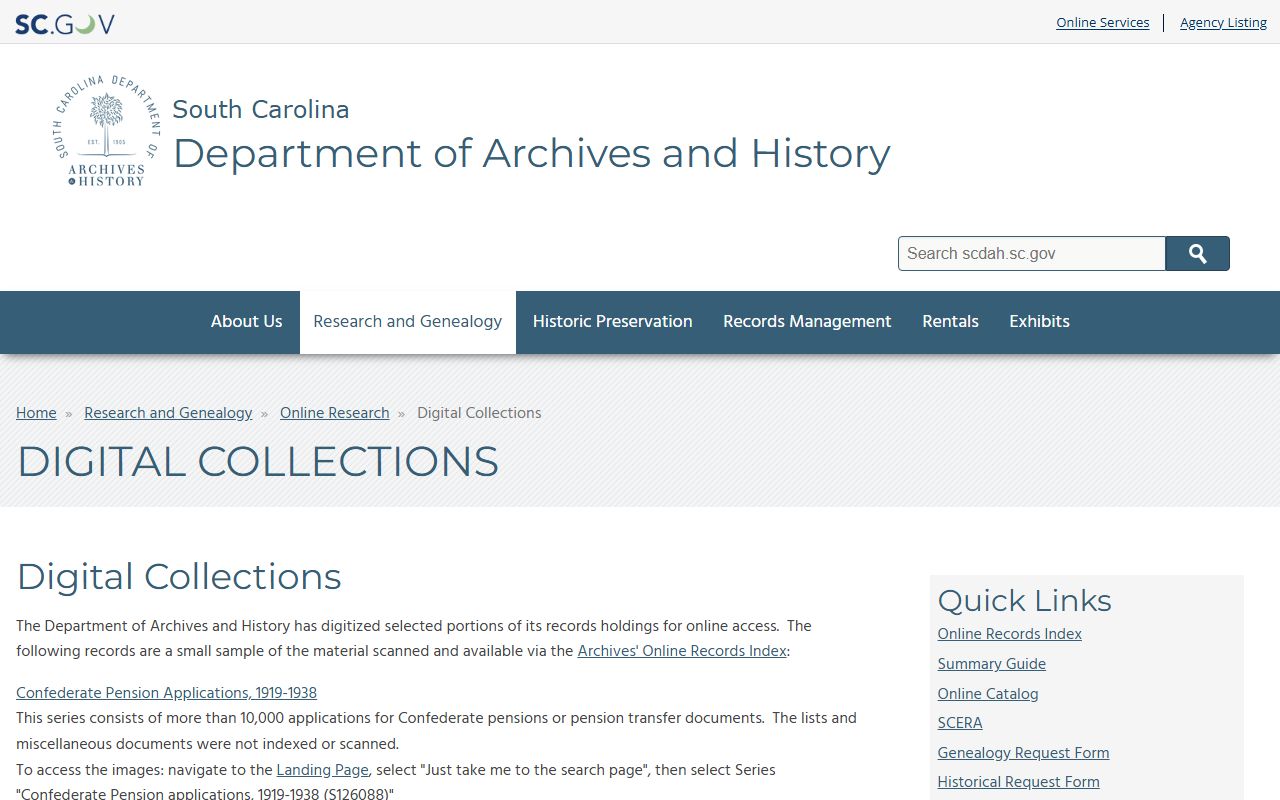
The South Carolina Electronic Records Archive at e-archives.sc.gov preserves born-digital records from state agencies and complements the physical holdings at SCDAH.
National and Volunteer Genealogy Resources for South Carolina
The Library of Congress South Carolina genealogy guide offers a curated list of resources covering vital records, census data, and local history collections. The guide addresses both digitized and physical resources and links to major repositories throughout South Carolina. It is a practical starting point for researchers just beginning to trace family history in the state.
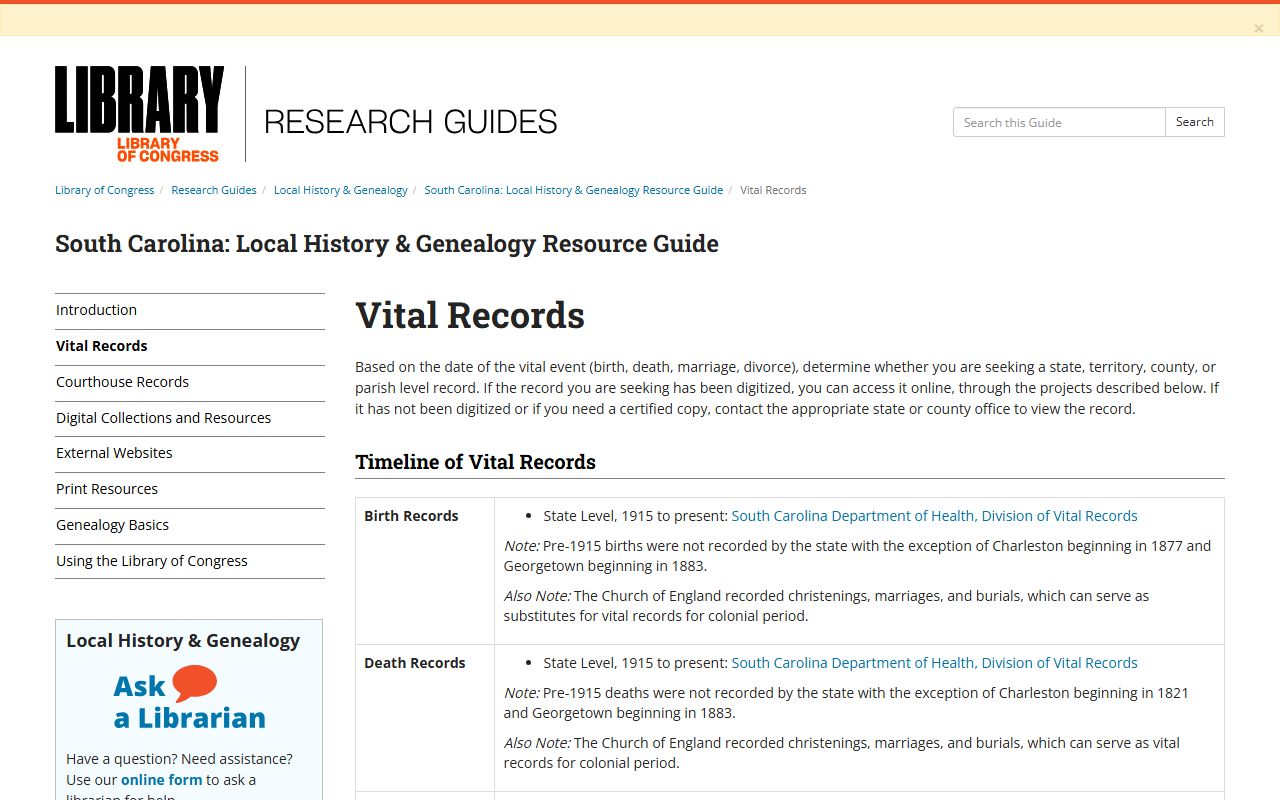
The LOC guide covers South Carolina from colonial times to the present and includes links to online databases not found elsewhere.
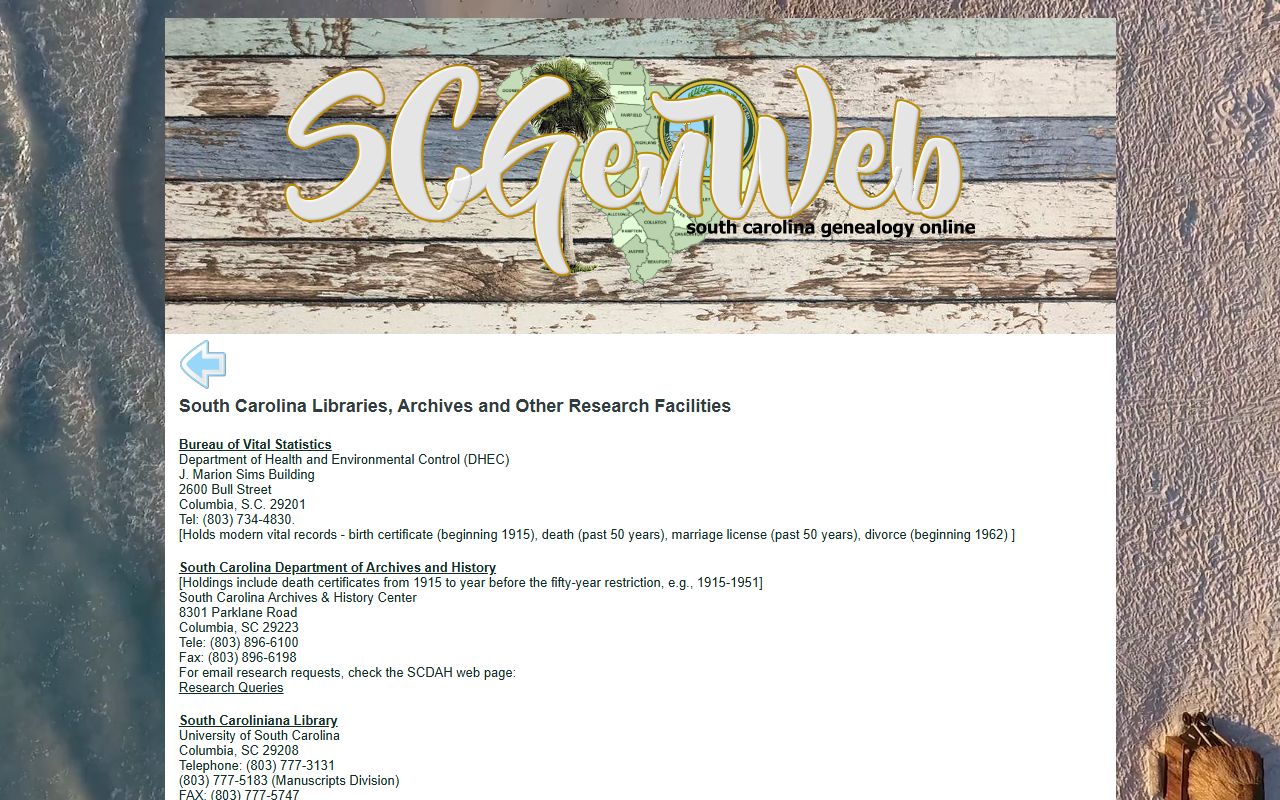
SCGenWeb at scgenweb.org maintains a statewide network of volunteers who index and transcribe South Carolina genealogy records by county. The archives include cemetery transcriptions, census extracts, family histories, and other documents organized county by county. This is a free resource for searching across multiple South Carolina counties at once.
The South Carolina Genealogical Society publishes the South Carolina Magazine of Ancestral Research and connects researchers to local chapters throughout the state. Their collections of transcribed records add value to any South Carolina genealogy project. SCIWAY at sciway.net/hist/genealogy provides a directory of South Carolina genealogical resources organized by county and record type, including libraries, archives, and historical societies.
Accessing South Carolina Genealogy Records by County
Land records are among the most important genealogy records in South Carolina. Title 30 of the South Carolina Code of Laws requires the maintenance and preservation of public records including deeds, mortgages, and land transactions at the county level through Register of Deeds offices. These records establish property ownership patterns and trace family movement between counties over time. Conveyance books and grantee indexes in many counties go back to the late 1700s.
County libraries across South Carolina maintain local history and genealogy collections that often hold materials not available in any statewide repository. Local history rooms may contain obituaries, city directories, cemetery records, church registers, and family histories specific to that county and its communities. When searching for South Carolina genealogy records, contacting the local library in the county where your ancestor lived is a step researchers often overlook. Several counties including Greenville and Charleston have significant online genealogy resources through their library systems.
Before 1915, researchers must rely on county records, church records, cemetery records, and other alternative sources. South Carolina's colonial history dating back to 1670 provides extensive documentation through land grants, probate records, court documents, and military records. The variety and depth of pre-1915 South Carolina genealogy records are considerable for a Southern state. SCDAH microfilm collections include many of these early county-level records, making them accessible without traveling to each individual county courthouse.
Browse South Carolina Genealogy Records by County
Each of South Carolina's 46 counties has its own Probate Court, Register of Deeds, and library resources for genealogy research. Pick a county below to find local contact information, resources, and genealogy guidance for that area.
South Carolina Genealogy Records by City
Residents of South Carolina's major cities can trace genealogy records through county offices and local libraries. Pick a city below to find genealogy resources in that area.